
Author Guidelines
Please download the Template that we have provided.
Title: Font Times New Roman, Size 16, Capital Each Word, left align, bolds
Author1, Author2, Author3, etc. (full name, not abbreviated, without a title, size 12)
1Institutions, Regions, Countries, email. (size 11)
2Institutions, Regions, Countries, email.
3Institutions, Regions, Countries, email.
Corresponding Author: email1(size 11)
Abstract: The abstract must be written as a single paragraph in standard English. It may not exceed 200 words and must use 12-point Times New Roman with single spacing. It should concisely summarize the entire study, including the research background, research gap, objectives, methodology, results, and novelty. Do not include citations or abbreviations. The abstract must be provided in both English and Indonesian. (Times New Roman, size 12, single spacing)
Keyword: Consists of 3-5 keywords, keyword 1, keyword 2, etc.
Manuscript Structure
Articles must contain writing containing, 1) Introduction, 2) Methods (can include analysis, architecture, methods used to solve problems, implementation), 3) Results and Discussion, 4) Conclusions and Recommendations, 5) References. The text uses Times New Roman in 12 bold letters. The contents of the introduction are the answers to the questions: a. background, b. Brief literature review, c. The reason for this research is, d. About goals.
INTRODUCTION
The introduction presents the research background concisely, clearly, and directly and explains the research gap, research uniqueness (state of the art) and research questions or research objectives. Use 12-point Times New Roman with single spacing. Foreign-language terms must be italicized (italic). Write narratively without a separate special subheading. Operational definitions, when necessary, should also be presented narratively. Every reference used must identify its source. Citations or references must use in-text citations, stating the author's surname and publication year in parentheses (Ali, 2025).
The objectives state the article's questions, which must be explained in the discussion and answered in the conclusion.
METHOD
The research method describes the research type, research object, population, sample, research time and location, instruments, analytical tools, and other matters related to the research procedure. This section may be divided into several paragraphs or subsections, but it should not use numbering.
RESULTS AND DISCUSSION
This section presents the data in concise form, data analysis, and interpretation of the findings. Results may be presented in tables or graphs to clarify the verbal explanation because an illustration can sometimes convey information more completely and clearly than a narrative. The Results and Discussion points must correspond to the research questions or objectives and must answer the research problems or hypotheses previously formulated.
In the final paragraph of the Results and Discussion section, explain the research finding (novelty) of the study.
CONCLUSION AND RECOMMENDATIONS
Conclusion
The conclusion must relate to the title and answer the research questions or objectives. Do not make statements that are not adequately supported by the findings. State the improvements contributed to industrial engineering or science in general. Do not add further discussion, repeat the abstract, or merely list the research results. Do not use bullet points; use paragraph form instead.
Limitations
This study has several limitations. First, it was conducted only on specific objects and during a particular period, so the findings cannot yet be generalized to all industrial sectors or regions. Second, the study used a limited set of variables, while other factors may also affect the dependent variable. Third, the research approach did not fully capture long-term changes. The findings should therefore be interpreted within the scope of this study.
Recommendations
Future studies should broaden the scope of research objects, increase the sample size, use a longer observation period, and include other relevant variables to develop a more comprehensive research model. Different analytical methods, such as Structural Equation Modeling (SEM), System Dynamics, Artificial Intelligence, or a longitudinal approach, may also provide a deeper understanding of the phenomenon under study.
Author Contributions
All authors made significant contributions to this study. These contributions included research conceptualization, development of the theoretical framework, data collection, data analysis, interpretation of results, manuscript preparation, scholarly revision, and final approval of the manuscript for publication. All authors confirm that they have read and approved the final version of the article.
Acknowledgment (Optional)
Acknowledgments to the parties involved ....?
REFERENCES
References are a list of information cited in the text and identified and retrieved by the authors from scholarly books and articles. The cited information must come from accurate and original sources. Consistent referencing allows readers to focus on the article's original content.
References must be presented completely and correspond to the information cited in the article. The reference list must be arranged alphabetically from A to Z and placed at the end of the manuscript, using the American Psychological Association (APA) style or the Mendeley application.
OTHER INFORMATION
Table
Description Place the table at the top of the table. The description is written in the middle with a distance of 1 space from the table. As with the description of the figure, the table description is also numbered sequentially. Writing table sources are Placed below the table and aligned with the left margin of the table in Times New Roman font size 10. Writing in the table is typed with a single space. Horizontal lines are prioritized for table lines while vertical lines are omitted.
Picture
Images are placed in the center (center) and referred to in the text (in line with the text). Captions for pictures are written under the pictures and numbered. Figure captions begin with an uppercase letter. If the description of the image is more than 1 line, it is written with a space of 1. If the image is a reference, then the source of the reference is also written. Image reference sources are typed in Times New Roman font size 10.
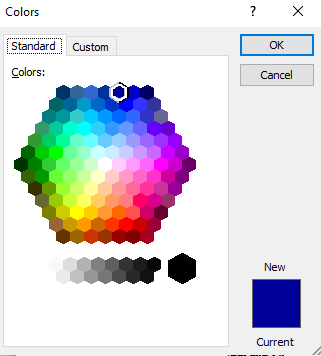
BLUE COLOR SECTIONS OR SUB MANUSCRIPTS
The blue color is part or sub-chapter of the article manuscript) as shown in the image below.
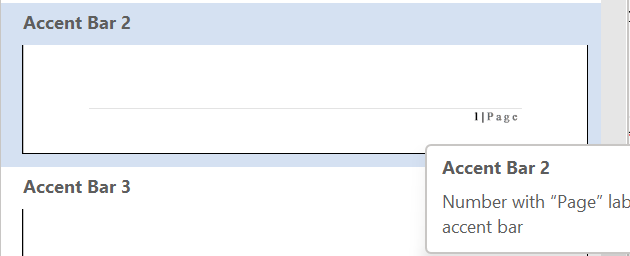
FOOTER OR MANUSCRIPT PAGE NUMBERING
Footer and page numbering of manuscripts (articles) use Accent Bar 2. The tutorial is (Insetè Page NumberèBottom PageèAccent Bar 2.
GENERAL NOTES
- A4 paper size
- Standard margins (top-bottom-right-left = 2.54)
- Font or text color must be black
- Section or subsection headings must be blue, as shown in this template and the attached example.
- The manuscript must use single spacing,
- Typeface: Times New Roman,
- Manuscript font size: 12
- Table and figure title font size: 10
- Table and figure content font size: 10
- Header and footer font size: 10
- Paragraph spacing before and after = 0
- Use one blank line between subsections or sections
- Articles submitted through OJS must be in Microsoft Word (.doc) format
- Manuscript length: 7-15 pages.
- Abstract and Introduction (maximum 25%)
- Method (maximum 10%)
- Results and Discussion (minimum 40%)
- Conclusions and References (maximum 25%)
- The article should not overuse numbering, except 1, 2, 3, and so forth. This numbering may be used for research questions, discussion sections, and conclusions. Example: 1. aaaaa; 2. bbbbb; 3. ccccc; and so forth.
- When numbering is used outside the research questions, discussion, and conclusions, it must differ from the numbering used in those sections. Example: a). ppppp; b). qqqqq; c). rrrrr; and so forth.
- Tables in the article must not be inserted as images (screenshots)
- References must follow the style of American Psychological Association (APA)
- References must match the citations and generally be published within the last five years.
- References must correspond to the journal index level. For example, a Sinta 2 journal must cite at least 40% of articles from Sinta 2 or higher journals, 50% from Scopus-indexed journals, and 10% from books. (for Sinta 2 or higher only)
- Manuscripts that do not comply with the format and template will be rejected.
- At least 20 references must be drawn from international and national scholarly journal articles.
- Tables must be presented in horizontal format and must not combine vertical and horizontal formatting, as shown in Table 1: Relevant Research.
- Published articles must report the authors' original research, and the title must not have been published in another journal.
- Yellow-highlighted instructions and these notes must be removed from the manuscript (article).
- The content of published articles is outside the responsibility of Siber Nusantara Publisher Group.